Showing posts with label spectacle. Show all posts

Friday, July 12, 2013

Waking Life: Jonathan Crary's 24/7: Late Capitalism and the Ends of Sleep


"Life is short. Stay awake for it." -- Caribou Coffee advertising slogan


When I was a kid in the 1960s one of the big questions I remember being tossed about was what to do with all of the free time that modern society would afford us. That there would be a virtually unlimited horizon of material abundance and thus leisure, and how best to use it, was a topic of talk in the media and at dinner. Year after year, union contracts (back when there were such things) negotiated increasingly generous benefits, including substantial time off from work. John Kenneth Galbraith’s 1958 classic The Affluent Society set the terms of the conversation early on by challenging Americans to muster the country’s broadly experienced largesse, made possible by the productive capacity of modern mass manufacturing, to serve the larger social good. Lyndon Johnson’s Great Society was subsequently founded on the notion that widespread wealth, and along with it leisure, were faits accompli.

The decades since have provided the answer to what we would do with all of our spare time, though it’s not the one most people expected. We have dealt with the problem of leisure by getting rid of it. Instead, we now work nonstop. Digital technology and the communications network it supports allow us to be on the job morning, noon, and night, wherever we may be. In his important new book, 24/7: Late Capitalism and the Ends of Sleep, visual culture theorist Jonathan Crary tells us that rather than herald a new age of freedom and self-determination, the new media technologies have ensnared us in a stickier web of control. This condition is characterized by the obligation to always be "on," the better to surrender ourselves to the continual means of our own mutual self-surveillance and hence domination in the form of Tweets, Facebook and Tumblr updates, texts, emails, blog posts, multi-tasking regimens, and the like.

Jonathan Crary
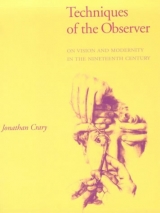
Crary, who is Meyer Shapiro Professor of Modern Art and Theory at Columbia University, is the author of two other significant books. The first, Techniques of the Observer: On Vision and Modernity in the Nineteenth Century, published in 1990, looks at the origins of modern visual culture in the first half of the 1800s, in particular the ways in which then emerging physiological science reduced human perception to a function of biological impulses, replacing the spiritual definition of self (i.e., the soul) with a more mechanistic one grounded in pure motor response and base instinct. The second, the award-winning Suspensions of Perception: Attention, Spectacle, and Modern Culture, was published a decade later and looked at the crucial period between 1880 and 1905 when vision was redirected toward solving the problem of attention (actually the lack of it), called upon to focus on specific phenomena as a way to combat the sensory overload of newly industrializing society. Both books essentially argue that these changes came about in the service of capitalism -- a cadre of isolated self-interested individuals was created who could function as perfect cogs in the machine constructed by the modern division of labor.


Though brief (a mere 133 pages) and lightly annotated, 24/7 is the capstone of Crary’s archeology of the spectacle and arguably the most significant of the lot. It’s informed by the erudition of one of the most thorough and original researchers at work today. The vast bodies of knowledge Crary seamlessly weaves together in 24/7 is reminiscent of the work of Michel Foucault, but without the gnarly, headache-inducing sentence structure. It’s marked by a moral passion that fuels Crary’s polemic and underscores what’s at stake, specifically the future of the human being in both the physical and emotional sense. Plus, it’s eminently readable, eschewing the critical theory gobbledygook of the tribe of radical art historians he’s most closely associated with, the so-called October group that includes Rosalind Krauss, Hal Foster, and Benjamin H.D. Buchloh. (Those folks have done and continue to do important work in their fields, but the need for cultural critique these days is simply too dire to be locked away in the ivory tower.)

In the round-the-clock world of twenty-first century global capitalism, our only relief is sleep, and as Crary notes, even that is coming under attack. 24/7 starts with a report on research being undertaken by the US military to extend the amount of time combat soldiers and other personnel can go without sleep, seeking to extend it from days to weeks. Given that military innovations usually make their way into broader aspects of everyday life -- air travel, the Internet, GPS, over-the-counter medications, all manner of consumer electronics, recreational assault weapons -- there is every reason to believe, as Crary asserts, that the sleepless soldier is the prototype of the sleepless worker/consumer. “Sleep is an uncompromising interruption of the theft of time from us by capitalism,” Crary writes. The endless here and now of 24/7 proposes to harvest surplus value not from only our bodies but from our psyches, rendering us little more than real-life Matrix pod-humans.

Crary doesn’t discuss it in 24/7, but an early iteration of this process can be discerned in the first part of the twentieth century when the techniques of mass manufacturing greatly reduced the amount of time needed to produce goods and services. In Time and Money: The Making of Consumer Culture, historian Gary Cross details the conscious policies adopted by the government and industry in the 1920s and 1930s to encourage material consumption, and along with it increased profit, instead of allowing spiritual respite. The commodity fetish, to use an old-fashioned term, became the mechanism by which capitalism increasingly inserted itself into everyday life, replacing personal relationships and local cultural practices with cold market logic mediated by consumer goods, proffering more stuff in lieu of more time.

A watershed moment Crary does address is the introduction of broadcast television after the Second World War. Following Raymond Williams's 1974 study Television: Technology and Cultural Form, Crary recognizes the way in which TV was inserted into everyday life as a soft mode of social control. Through what Williams terms its "planned flow," television organized the daily routine from morning commuting information and weather reports to midday newsbreak to evening entertainment, culminating in nightly sign off, all the while promoting the ostensible benefits of a mass industrial consumer utopia. In the 1950s and 1960s, television was a relatively stable system, drawing an increasingly suburban and decentralized population into a homogenized national imaginary. The advent of cable TV and programmable VCRs in the 1970s offered the opportunity for time shifting and what McKenzie Wark in his new book terms the "disintegrating spectacle," the way in which control has become atomized and diffused yet more difficult to circumvent. This is represented today by such technologies as social media, wireless communications, and the Internet.

Against the relentless tide of 24/7 production and consumption, Crary proposes that we reclaim sleep as a site of unregulated desire, a mode of resistance to the rational calculation of the market, a state in which we might imagine "a world without billionaires, which has a future other than barbarism or the post-human, and in which history can take on other forms than reified nightmares of catastrophe." Going to sleep presupposes that one will arise anew the next day, refreshed and with the hope of new possibilities. As the web of 24/7 gets harder and harder to escape, sleep becomes as good a place as any to kickstart the opposition. So, workers of the world -- go to bed!

Update: December 2, 2013: The Verso Blog wrote a post on the version of my review of 24/7 that appeared on the New School for Social Research e-zine Public Seminar. Click here to read it.

Monday, March 12, 2012

Scott Hocking's Garden of the Gods

The long-abandoned 3.5 million square foot Packard Automotive Plant, production site of one of America's premier automotive luxury brands, has been recently slated for demolition (photo: Albert Duce, Creative Commons license CC BY-SA 3.0).
It was recently announced that after more than five decades of abandonment and neglect, the sprawling, decrepit Packard Automotive Plant on the east side of Detroit will be demolished by its ostensible current owner Dominic Cristini. (For news coverage, click here, here, here, and here.) Designed in the early 1900s by industrial architect Albert Kahn, the 40-acre, 3.5 million square foot complex was once the headquarters and main production site for the Packard Motor Car Company, one of the premier American luxury automobile brands of the 20th century. The plant was the first large-scale reinforced concrete industrial construction project in the world and at its opening in 1907 was considered to be the most advanced facility of its kind anywhere. The plant's opening preceded by three years Henry Ford's legendary Highland Park Plant (also designed by Kahn and immortalized by Louis-Ferdinand Celine in Journey to the End of the Night -- for $5 a Day) and the moving assembly line by six.

Since its closing in 1958, the complex has progressively fallen into decay with several sections in collapse as a result of exposure to the elements and a succession of fires; although, most of the buildings remain structurally sound due to their reinforced concrete construction. Much of the wiring and other building materials have been stripped by scavengers over the years. In recent times, the plant has also served as an enclave for so-called urban explorers, graffiti artists, and purveyors of the photographic genre known as "ruin porn." Without question, the most significant work done in this environment is that of Detroit artist Scott Hocking.


Born in Detroit in 1975, Hocking has been surveying the postindustrial landscape of Detroit for more than a decade. His project Relics, begun in 2001 in collaboration with Detroit artist Clinton Snider, has collected thousands of found objects and organized them into various grid configurations, which are exhibited from time to time. The result of an ongoing series of Situationist-like derives (drifts) through the city's wastelands, Relics gathers up the castoffs of modernity's material culture and presents them as metonyms of lives and livelihoods ruined in the transition from the Fordist to the post-Fordist mode of production, a tidal wave of creative destruction under which vast sections of Detroit have been literally and figuratively washed away. Permeated with the smell of grime and decay and odors of chemicals whose half-lives will persist into future centuries, the assemblages of broken toys, appliance fragments, rotted clothing, rusted machine parts, architectural remnants, and other abandoned ephemera, register the psychic realignment that has taken place in the migration from the age of mechanical reproduction to the regime of neoliberalism, of all that was once solid melting into air.
Scott Hocking and Clinton Snider, Relics, 2001, mixed mediums (original installation view at the Detroit Institute of Arts). (All Hocking images courtesy of the artist and Susanne Hilberry Gallery.)
Hocking's installation in the Packard Plant, Garden of the Gods (2009-2011), is among his most remarked-upon works, and it is arguably one of the most significant. Situated in a section of an upper floor where the roof has collapsed, the piece uses columns still standing amidst the rubble as pedestals upon which are perched old TV consoles retrieved from elsewhere in the building. (At one point in its devolution, the plant was used in part as storage space. One loft area was apparently used by a television repair and recycling service, the remains of which are still there.) 

Taking its title from a sedimentary rock formation in the Shawnee National Forest in southern Illinois, Garden of the Gods takes each of its 12 monuments as a member of the Greek pantheon. Over time some of these have also fallen over and other pieces of the structure have collapsed. The process of entropy has been photographically documented periodically since the TVs were first installed in 2009.


Top: Scott Hocking, Garden of the Gods, West, Summer.
Middle: Garden of the Gods, West, Winter.
Bottom: Garden of the Gods, Northeast, Snow.
Hocking readily acknowledges the site-specificity of this and other works, yet at the same time he gestures toward a broader historical view. From a mythological perspective, Garden of the Gods is a meditation on the hubris and repeated failure of humankind's stratagems of control over nature, a mytheme that goes back into distant times. (For an excellent interview with the artist on this and other aspects of his work, see Sarah Margolis-Pineo's "Seeing Beauty in All Stages.")

Closer to the present, Garden of the Gods can be read as a dystopian reflection of the effects of spectacle society. Hocking talks of thinking about the site originally as reminiscent of a classical amphitheater, a stage upon which to present a cast of epic characters. Coming then upon the trove of abandoned televisions sets, he instantly made the connection between the upright pillars and  the TV consoles as the appropriate dramatis personae. "It is almost too simplistic that the TVs are new gods," the artist has said. But I would argue that in this regard Garden of the Gods is in fact quite astute.

In his classic study Television: Technology and Cultural Form, Raymond Williams asserts that the rise of TV as the quintessential mass medium of the postwar era is inextricably bound up in its ability to communicate over large distances via the broadcast signal. In the United States, television worked in concert with the personal automobile and the suburban single-family housing development to demassify the urban core and construct a national imaginary based on the concept of "mobile privatization," the idea that one could the survey outside world from the comfort and security of one's own living room. (An excellent study on the effects of this process in American society during the 1960s and beyond is Joshua Meyrowitz's No Sense of Place: The Impact of Electronic Media on Social Behavior.) And while the inner city has been substantially abandoned and thus devastated, the suburbs surrounding Detroit are actually quite the opposite. (Oakland County, just north of the city, is one of the nation's most affluent areas.) Mobile privatization became the means by which the public sphere imploded only to be replaced by the isolation of a domestic simulacrum whose only respite is consumerism, the true god being worshipped through the medium of TV.

The physical and psychic traces of the repercussions of mobile privatization and its consumerist orientation are stunningly apparent in Detroit. In light of the recent, and some say terminal, crises of the modern capitalist world-system, Garden of the Gods is a harbinger of what the future may hold.


Above: Scott Hocking, Zeus Summer.
Below: Zeus Destroyed.