Friday, July 12, 2013

Waking Life: Jonathan Crary's 24/7: Late Capitalism and the Ends of Sleep


"Life is short. Stay awake for it." -- Caribou Coffee advertising slogan


When I was a kid in the 1960s one of the big questions I remember being tossed about was what to do with all of the free time that modern society would afford us. That there would be a virtually unlimited horizon of material abundance and thus leisure, and how best to use it, was a topic of talk in the media and at dinner. Year after year, union contracts (back when there were such things) negotiated increasingly generous benefits, including substantial time off from work. John Kenneth Galbraith’s 1958 classic The Affluent Society set the terms of the conversation early on by challenging Americans to muster the country’s broadly experienced largesse, made possible by the productive capacity of modern mass manufacturing, to serve the larger social good. Lyndon Johnson’s Great Society was subsequently founded on the notion that widespread wealth, and along with it leisure, were faits accompli.

The decades since have provided the answer to what we would do with all of our spare time, though it’s not the one most people expected. We have dealt with the problem of leisure by getting rid of it. Instead, we now work nonstop. Digital technology and the communications network it supports allow us to be on the job morning, noon, and night, wherever we may be. In his important new book, 24/7: Late Capitalism and the Ends of Sleep, visual culture theorist Jonathan Crary tells us that rather than herald a new age of freedom and self-determination, the new media technologies have ensnared us in a stickier web of control. This condition is characterized by the obligation to always be "on," the better to surrender ourselves to the continual means of our own mutual self-surveillance and hence domination in the form of Tweets, Facebook and Tumblr updates, texts, emails, blog posts, multi-tasking regimens, and the like.

Jonathan Crary
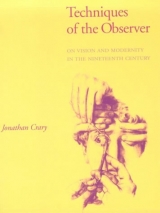
Crary, who is Meyer Shapiro Professor of Modern Art and Theory at Columbia University, is the author of two other significant books. The first, Techniques of the Observer: On Vision and Modernity in the Nineteenth Century, published in 1990, looks at the origins of modern visual culture in the first half of the 1800s, in particular the ways in which then emerging physiological science reduced human perception to a function of biological impulses, replacing the spiritual definition of self (i.e., the soul) with a more mechanistic one grounded in pure motor response and base instinct. The second, the award-winning Suspensions of Perception: Attention, Spectacle, and Modern Culture, was published a decade later and looked at the crucial period between 1880 and 1905 when vision was redirected toward solving the problem of attention (actually the lack of it), called upon to focus on specific phenomena as a way to combat the sensory overload of newly industrializing society. Both books essentially argue that these changes came about in the service of capitalism -- a cadre of isolated self-interested individuals was created who could function as perfect cogs in the machine constructed by the modern division of labor.


Though brief (a mere 133 pages) and lightly annotated, 24/7 is the capstone of Crary’s archeology of the spectacle and arguably the most significant of the lot. It’s informed by the erudition of one of the most thorough and original researchers at work today. The vast bodies of knowledge Crary seamlessly weaves together in 24/7 is reminiscent of the work of Michel Foucault, but without the gnarly, headache-inducing sentence structure. It’s marked by a moral passion that fuels Crary’s polemic and underscores what’s at stake, specifically the future of the human being in both the physical and emotional sense. Plus, it’s eminently readable, eschewing the critical theory gobbledygook of the tribe of radical art historians he’s most closely associated with, the so-called October group that includes Rosalind Krauss, Hal Foster, and Benjamin H.D. Buchloh. (Those folks have done and continue to do important work in their fields, but the need for cultural critique these days is simply too dire to be locked away in the ivory tower.)

In the round-the-clock world of twenty-first century global capitalism, our only relief is sleep, and as Crary notes, even that is coming under attack. 24/7 starts with a report on research being undertaken by the US military to extend the amount of time combat soldiers and other personnel can go without sleep, seeking to extend it from days to weeks. Given that military innovations usually make their way into broader aspects of everyday life -- air travel, the Internet, GPS, over-the-counter medications, all manner of consumer electronics, recreational assault weapons -- there is every reason to believe, as Crary asserts, that the sleepless soldier is the prototype of the sleepless worker/consumer. “Sleep is an uncompromising interruption of the theft of time from us by capitalism,” Crary writes. The endless here and now of 24/7 proposes to harvest surplus value not from only our bodies but from our psyches, rendering us little more than real-life Matrix pod-humans.

Crary doesn’t discuss it in 24/7, but an early iteration of this process can be discerned in the first part of the twentieth century when the techniques of mass manufacturing greatly reduced the amount of time needed to produce goods and services. In Time and Money: The Making of Consumer Culture, historian Gary Cross details the conscious policies adopted by the government and industry in the 1920s and 1930s to encourage material consumption, and along with it increased profit, instead of allowing spiritual respite. The commodity fetish, to use an old-fashioned term, became the mechanism by which capitalism increasingly inserted itself into everyday life, replacing personal relationships and local cultural practices with cold market logic mediated by consumer goods, proffering more stuff in lieu of more time.

A watershed moment Crary does address is the introduction of broadcast television after the Second World War. Following Raymond Williams's 1974 study Television: Technology and Cultural Form, Crary recognizes the way in which TV was inserted into everyday life as a soft mode of social control. Through what Williams terms its "planned flow," television organized the daily routine from morning commuting information and weather reports to midday newsbreak to evening entertainment, culminating in nightly sign off, all the while promoting the ostensible benefits of a mass industrial consumer utopia. In the 1950s and 1960s, television was a relatively stable system, drawing an increasingly suburban and decentralized population into a homogenized national imaginary. The advent of cable TV and programmable VCRs in the 1970s offered the opportunity for time shifting and what McKenzie Wark in his new book terms the "disintegrating spectacle," the way in which control has become atomized and diffused yet more difficult to circumvent. This is represented today by such technologies as social media, wireless communications, and the Internet.

Against the relentless tide of 24/7 production and consumption, Crary proposes that we reclaim sleep as a site of unregulated desire, a mode of resistance to the rational calculation of the market, a state in which we might imagine "a world without billionaires, which has a future other than barbarism or the post-human, and in which history can take on other forms than reified nightmares of catastrophe." Going to sleep presupposes that one will arise anew the next day, refreshed and with the hope of new possibilities. As the web of 24/7 gets harder and harder to escape, sleep becomes as good a place as any to kickstart the opposition. So, workers of the world -- go to bed!

Update: December 2, 2013: The Verso Blog wrote a post on the version of my review of 24/7 that appeared on the New School for Social Research e-zine Public Seminar. Click here to read it.

Sunday, May 26, 2013

Challenges and Opportunities of Art Coverage in the Age of Media Convergence


Midtown Detroit Inc. put up a podcast of the panel discussion I moderated at Museum of Contemporary Art Detroit (MOCAD) as part of Art X Detroit 2013 last month. Thanks to Annmarie Borucki of Midtown Detroit who took care of the production details. Also the panelists who participated and all who came by to check it out.
This panel included Amanda Browder, from Bad At Sports; Travis Wright of WDET-FM; Michael H. Hodges of the Detroit News; and Jennifer Conlin of CriticCar Detroit.
Here's the panel description:
The new media environment is dramatically changing the way the arts get covered. Media industry consolidation is putting pressure on traditional news outlets to develop alternate business models and modes of delivery, often resulting in staff cuts in order to compete. Digital technology merges text, sound, and image into a single dynamic experience that can be accessed from a variety of devices. At the same time, interactive communications and social media have blurred the lines between producers and consumers of arts coverage. Arts journalists and critics are being forced to adopt new ways of working and to even question their relevance. This panel brings together arts journalists and critics from across the spectrum to examine the current media ecosystem and the market demands behind the shift from traditional arts coverage to blogging, aggregated news, and other models. Ultimately, the issues to be decided are why arts coverage matters and how to make local arts coverage more sustainable.
Below is the Sound Cloud podcast:

Also some photos from the event taken by Artserve Michigan's Communications Specialist Sarah Nesbitt.
The panel from left to right: Vince Carducci, Michael Hodges, Travis Wright, Amanda Browder, and Jennifer Conlin
Michael Hodges (center) gave a passionate defense of dead-tree media.
Travis Wright signifies for the arts.
Amanda Browder is bad at sports but good at investigating cool art.
Jennifer Conlin and CriticCar Detroit gives voice to the audience of cultural events.

Monday, December 3, 2012

Nancy Mitchnick, Painting Future Past

Nancy Mitchnick, That is One Mean Mother Fucking Shark, 2012, oil on canvas, 36" x 53.5" (All images courtesy of the artist).
A few years ago, Detroit-born painter Nancy Mitchnick began working on a series of canvases inspired by her hometown. Living at the time in Cambridge, Massachusetts, Mitchnick had left the Motor City long ago, relocating to New York in mid-1970s, then moving to California to teach at CalArts in the late 1980s, and ending up at Harvard, where she held the position of Arnheim Lecturer on the Visual Arts for more than a decade.  "The Detroit Project," as she called this series of paintings, prompted her to move back to the Motor City earlier this year to live and work.

One of the original members of the legendary Cass Corridor Group, Mitchnick settled in another of the region's noted bohemias, Hamtramck, a small ethnic enclave virtually surrounded by Detroit, which had been incorporated as a separate city in 1922 essentially as a tax haven for the Dodge Brothers Company, which for decades operated their main assembly plant nearby. The artist took a studio in the Russell Industrial Center, a mammoth seven-building complex designed by architect Albert Kahn in 1915 for the Murray Body Company, a supplier of stamped metal automotive components for manufacturers who lacked large-scale fabrication facilities, including Dodge, Hudson, Hupmobile, and Studebaker, and now home to artists studios and other creative enterprises.

Once Mitchnick arrived in the city and set up shop, however, she found that she was unable to develop the "Detroit Project" as the ideas simply wouldn't come. Instead, she began working on a series of "covers," i.e., works that reinterpret famous masterpieces that have influenced her development as artist and to which she returns in times when her creative batteries need recharging. Some 20 of these paintings were on view at the historic Scarab Club in Detroit this past fall in an exhibition titled "Time Travel."

In discussing the series, Mitchnick has confessed to not really knowing what to make of it. But it just so happens that at the time I was reading Alfred Gell's Art and Agency: An Anthropological Theory (Clarendon: 1998), which offered some insight. A Reader in Anthropology at the London School of Economics and Political Science, Gell died of cancer in 1997 at age 51, and he only published three books in his lifetime. Considered one of the most gifted anthropologists of his generation, Gell completed the full draft of Art and Agency shortly before his untimely death. He sought in this posthumous work to posit a theory of art that was, as the postmodernists have it, de-centered, that is, specifically extricated from Western aesthetic ideology. And I have to admit that for me it was a game changer.

Instead of looking at art (a problematic word in this context) as a form of expression, Gell asserts it as a form of doing, a nexus of complex intentionalities, not always conscious, that mediates social agency (in social science, the capacity to act). Not unlike Bruno Latour's concept of the actant in actor-network theory, agency in Gell's view may be situated in any number of places, not just the artist's intention. For example, the demands of religious ritual exert agency over the creator of sacred objects. More prosaically, a patron exerts agency over a portraitist, who is bound to execute a likeness in fulfilling a commission. Even the contemporary artist is in a very real sense subject to the agency of an artworld he or she must negotiate socially, economically, intellectually, and aesthetically. Working off of the thought of American pragmatist philosopher and coiner of the term "semiotics" Charles Sanders Peirce, Gell understands art as constituting the "abduction of agency," the trace by which agency can be inferred similarly to the way we infer fire by the presence of smoke.

The art nexus has four elementary nodes:
  • First, is the index, which is the material thing that motivates abductive inferences, interpretation, and so on.
  • Second, is the artist (or other originator) responsible for the existence and characteristics of the index.
  • Third, is the recipient, those upon whom agency is exerted by the index or who exerts agency via the index.
  • Fourth, is the prototype, which is what is represented in the index and which may or may not entail resemblance.
It is this fourth node that is key to understanding what's going on in the "Time Travel" series and what interested me in the paintings Mitchnick executed as part of it.

In relation to the prototype, the artist (in this case Mitchnick) is actually the recipient of agency (in the form of the impetus of the sources she reworks), and the index (each individual painting) is its material embodiment. Every artist, of the trained variety at least, studies the canon of previous creations (AKA art historical masterworks) and identifies those that inspire and/or influence him or her. The various paintings in "Time Travel" are indexes of prototypes Mitchnick encountered either in person or through printed sources. That Is One Mean Mother Fucking Shark, 2012, is based on John Singelton Copley's 1778 oil painting Watson and the Shark (itself likely influenced among other sources by Peter Paul Rubens's Jonah Thrown into the Sea, 1618), a version of which is in the collection of the Detroit Institute of Art. It is a painting Mitchnick has viewed countless times going back to her childhood.
Detail: Las Meninas, for Olivia, 2011-2012, oil on canvas, 24" x 16".
The prototype also factors significantly, according to Gell, in understanding the ebbs and flows of an artist's oeuvre. Contrary to the teleological view of conventional art history, artists move back and forth in their development, taking some steps forward and some steps back, leaving behind indexes of the process that are dispersed in space and time. Those works that serve as prototypes for later works are identified by Gell as indexing "pretension," which can be "weak" in the case of precursors or "strong" in the case of preparatory studies and sketches. Those that refer to previous prototypes index "retention," which also can be "weak" in the case of recapitulations or "strong" in the case of copies. (The DIA's version of Watson and the Shark, the third version Copley did of the subject, fits in between the two poles of retention in that it isn't an exact copy of earlier iterations but neither is it a recapitulation in the same way as, say, Paul Cezanne's later views of Mont Sainte-Victoire, a prototype Mitchnick explores in The Cezanne Quartet, 2012.)

Memory and Ruin, 2012, oil on canvas, 59" x 99".
In discussing the relationship of artwork to artist, Gell takes a phenomenological approach. From this perspective, the artwork is an index of the artist's subjective mental processes that both registers what has gone before and announces what is yet to come. The major piece in the "Time Travel" exhibit in this regard is Memory and Ruin, 2012, not just because it happens to be the largest in scale but because it recapitulates the moment in Mitchnick's experience that informs the entire series, what led up to it, and where it might go. Based on an example of the Illusionistic, or Architectural, Style of Roman wall painting reproduced in the book Domus: Wall Painting in the Roman House (Oxford: 2005), it reproduces two of the works from the "Detroit Project" on either end. It also features portraits of the artist as a child on the left and her mother in her prime on the right, posed as caryatids in the manner of Classical art holding up the Detroit images.

Memory and Ruin adds original details to the prototype, which none of the other paintings in the series does. (The typical conceit of the other works is to focus on a particular detail of the prototype and riff off that but not to really add anything new to it.) The work indexes the future past of the stalled series begun in anticipation of ending a self-imposed exile, precursors to the work that will be done when the "Detroit Project" is taken up again (which as of this writing the artist has begun to do). It also indexes the artist's personal history along with her creative one. All of them together constitute what phenomenologists term a "sedimentation," the physical record of experience evidenced through layers of space and time. Each of the sedimentary strata also indexes the various sorts of prototypes exerting agency over the artist's production. (As an aside, all artworks are essentially existential ruins, vestiges of the artist's agency in the moment of creation, which at the instant the brush touches the canvas begins to fade into memory.)

While "Time Travel" is in some respects a detour from the artist's trajectory, a retention that melds weak and strong prototypes in anticipation of the next chapter in the development of an oeuvre, it offers insight not only into Mitchnick's specific practice but artmaking in general. It is a most interesting case to consider, and it will be even more interesting to see what comes next.
Detail of the artist's mother from Memory and Ruin.

Saturday, December 1, 2012

The Aesthetics of Civil Society

I Heart ART Mesh Hats
Image: I Heart ART Mesh Hats by dawnfx

University of Illinois Chicago political scientist Kelly LeRoux (who got her PhD at Wayne State University here in the D) and co-author Anna Bernadska recently published a study, funded by the National Endowment for the Arts, that shows a positive correlation between participation in the arts and engagement with civil society. They analyzed more than 2700 respondents to the 2002 General Social Survey, conducted biannually by the National Opinion Research Center at the University of Chicago and generally considered one of the primary sources of data on American social trends. Their analysis found that people who have direct or indirect involvement with the arts are more likely to also have direct participation in three dimensions of civil society: engagement in civic activities, social tolerance, and other-regarding (i.e., altruistic) behavior. These results hold true even when factoring in demographic variables for age, race, and education.

Most studies on the social impact of the arts address economics and related externalities such as improved educational outcomes and general community well being. (See, for example, the work of Ann Markusen of the Project on Regional and Industrial Economics at the University of Minnesota summarized in my blog post here.) The study by LeRoux and Bernadska is different in that it empiricially investigates ties between the arts and citizenship. Instead of seeking a market rationale for arts patronage, the authors stress the benefits for civic virtue. The study is also noteworthy because rather than looking at the direct impact of community and other arts projects, such as mural painting, theatrical productions, and the like, it takes an audience-studies approach more typically associated with media and communications analysis.

It's important to note that the authors demonstrate correlation not causation. In statistics, correlation establishes the dependence of certain variables on one another, which is useful in predictive modeling. But the relationship, either positive (the more of one variable, the more of the other) or negative (the more of one variable, the less of the other), doesn't necessarily mean that the one is specifically the cause of the other. There may be other factors at work (called intervening variables) not measured in the analysis. While that may be the case, the study is still useful in suggesting additional ways in which the arts benefit society.

Not the least of these is the development of the critical function, which is fundamental to the advancement of discourse and building consensus on matters of common concern within the public sphere, which civil society theorists see as key to a viable, participatory democracy. Indeed, German social scientist and political philosopher Jurgen Habermas in his important study, The Structural Transformation of the Public Sphere: An Inquiry into a Category of Bourgeois Society (MIT: 1991 [1962]), cites the development of the field of literary criticism and aesthetics over the roughly 150-year period in Europe starting in the late 17th century as laying the groundwork for citizens to think independently and thus reflect upon their role in society and ultimately act as political agents. More recently, French philospher Jacques Ranciere in books such as The Future of the Image (Verso: 2009), Dissensus: On Politics and Aesthetics (Continuum: 2010), and The Emancipated Spectator (Verso: 2011), has established the link between aesthetic practice and political action.

This also explains why anti-democratic forces in American society have worked so hard, starting with the so-called Culture Wars of the 1980s, to eliminate public funding for the arts. It turns out, that Big Bird really is potentially subversive.

Thursday, November 29, 2012

Occupy the White House

Lego® White House (ages 12+ $49.95, click here to buy).
A couple of days after the November 6 election, my New School pal Sam Binkley posted this comment on his Facebook page:
As I see it, the occupy movement deserves a lot of credit. Nobody was talking about economic inequality before fall '11, but after all the media coverage of the various occupy groups, that theme became a fixture of the liberal and democratic narrative right up to the election, and remained a staple of Obama and other campaigns. Did I hallucinate that or did it happen?
He didn't elaborate on this sentiment, which he could have easily done from his perspective as a cultural sociologist, and perhaps he did in another context and I just didn't know about it. But I believe he's right. So I'd like to take a detour from my normal blogging beat to explain.

New Social Movement theory as laid out by Jean Cohen and Andrew Arato in their authoritative text Civil Society and Political Theory (MIT: 1994) can be seen to have four distinct phases of political action, which I call the four "I's." (Cohen and Arato use slightly different language but I feel that the alliteration has value as a mnemonic device.)

The first is identity, coming out as it were to declare one's right to openly exist in the public sphere. The individuals who physically showed up in the place originally known as Liberty Plaza Park in Lower Manhattan on September 17, 2011, in the opening episode of the Occupy movement, to protest growing social and economic inequality in the United States, embraced such a political identity. That public intellectuals such as Naomi Klein and Slavoj Zizek and celebrities such as Susan Sarandon, Mark Ruffalo, and Deepak Chopra, among others, put in appearances with the Occupy crowd further raised the profile.

The identity position of Occupy soon spread to other parts of the country and then around the world, leading to the second phase, namely, inclusion. In this phase, identity (in social theory lingo, subjectivity) establishes a collective aspect. More and more individuals recognize the identity/subjectivity as applicable to themselves and embrace it. This was neatly summed up by the slogan, "We are the 99 percent," which had numerous iterations in various media, from handmade banners and buttons to formal organizational designations.

The critical mass of inclusive identity led to the third phase, influence. While the mainstream media ignored the phenomenon in the early days, the Occupy movement soon became too large to ignore. The meme of the 99 percent vs. the 1 percent changed the national conversation just as Binkley asserts. In social movement theory, the ability to redirect public discourse toward your point of view is called "reframing," and it's a primary objective of consciousness-raising efforts of many varieties.

The final phase, institutionalization, is the most difficult to achieve. Cohen and Arato refer to it as "the politics of reform" in which the state accommodates the mandate of the movement within the official political process. Civil rights legislation is one of the more readily identifiable examples. The 2012 presidential election, I would argue in concurrence with Binkely, was another. Certainly in recent memory there has been no clearer icon of the 1 percent than Mitt Romney, a self-satisfied scion of the ruling class, apparent prep school bully and vulture capitalist, who made a quarter of billion dollars pillaging takeover targets of any value and then stashing who knows how much of it in offshore accounts to avoid taxes. He basically admitted as much himself with his infamous "47 percent" comment even if he low-balled the number by a tad under half.

But before we get too celebratory about all of this, I ask you to also consider the following. In their important study, Poor People's Movements: Why They Succeed, How They Fail (Pantheon: 1977), Frances Fox Piven and Richard Cloward observe that the institutionalization of social movement activism within the state apparatus and other establishment structures tends to effectively put people back in their place. The biggest gains tend to come in periods of disruption--the industrial labor movement in the 1930s is one example they give--only to be co-opted in their assimilation into the so-called mainstream, as in the subsequent evolution of the American union movement as a partner of management in the years since.

I have been convinced pretty much from the beginning that the first election of Barack Obama served a similar function in 2008, providing a cathartic release for the widespread disenchantment being felt among so many people with the dismantling of the American Dream under the Bush Administration. (This even though I admit to welling up with emotion when on election night as I watched the scenes being broadcast from Grant Park on TV as the President-Elect pronounced that "this [was my] victory.") And I further think that the 2008 election may very well have delayed the emergence of the Occupy movement by three years.

Whether the second Obama Administration turns out to be another Thermidorian Reaction remains to be seen. Although I did hear a rumor that the other day someone on K Street saw Grover Norquist blink. One can only hope.
Image: Vince Carducci

Addendum (November 30, 2012, 3:30pm): Paul Krugman's Op Ed piece in the Friday November 30, New York Times lends further support to the thesis.

Wednesday, September 26, 2012

The Arcadian Visions of Ton Matton


One of my New School dissertation committee members, Ken Wark, brought this Vimeo piece to my attention and I found it relevant to share. Ton Matton is a Dutch architect and environmental designer who currently resides in the village of Wendorf in northeast Germany near the Baltic Sea. Matton's residence/studio is an abandoned schoolhouse, which he rehabilitated and named "Werkstatt Wendorf" (Workshop Wendorf). For the last decade, it's where he's conducted experiments in what he terms "autarkic" (self-sufficient) design.

One of his projects is Bosbus (2004), a mobile nature preserve Matton constructed from an old municipal bus for the Rotterdam Architectural Biennale. Another is Bird Suburb (no date), an installation of dozens of identical birdhouses set at regular spatial intervals around his rural home that birds have refused to occupy, evidence in Matton's view of the inhospitable, indeed unnatural, quality of the cookie-cutter approach to suburban subdivision development.
Ton Matton, Bosbus, 2004, exterior view (above); interior view (below).
Matton's work resonates with some of what's being done in Detroit, which I have identified as the "Postindustrial Arcadia." A big difference, though, is that Matton left the city in an attempt to regain the state of nature whereas in Detroit the city essentially left us. Nature, which of course has been there all there, just made itself more visible in the process.

There's another difference that seems important to me. As noted above, Matton's work is experimental, proposing ideas to change ways of thinking, which is all well and good. But they seem to be bracketed in way that the cultural production in Detroit I'm talking about isn't. The Detroit projects (the Heidelberg Project, The Power House, Ride-It-Sculpture Park, DFlux, etc.) are embedded in their local environments, making them more concrete as it were. In fact, they are each in their way transformative. It's the difference between utopian thinking of the conventional variety and the "real utopia" I've written about

Tuesday, September 4, 2012

Ann Markusen on Creative Placemaking

Prof. Ann Markusen, 'Creative Placemaking: Artists, Designers, and Arts Organizations as Shapers of Urban Space and Vitality' from GSA on Vimeo.

Ann Markusen, economist, professor, and director of the Project on Regional and Industrial Economics at the University of Minnesota, is probably the main researcher of the idea of the "creative placemaking." (Click here to download a PDF of her paper on the subject prepared for the National Endowment for the Arts.) Markusen is more astute than Richard Florida in my opinion because she has really done the research in-depth as opposed to just gesturing toward it. I still have some issues with the idea as it relates to the whole gentrification thing, but it's worth checking out if only to understand the way things are being framed by high-level institutions such as ArtPlace. This lecture was presented a couple of years ago at the Glasgow School of Art, which is where 2009 Kresge Arts in Detroit Fellow Cedric Tai is currently doing his MFA.

Markusen's first foray into the impact of the creative industries on local economies is The Artistic Dividend (2003), written with David King and which uses data from the US Census to uncover the contribution artists make to regional development (download PDF). The perspective takes artists as entrepreneurs, essentially acting like small businesses not only selling their own wares but generating value-added economic activity through their consumption of services such as bookkeeping and computers, materials, and other things they need to do their work. The study focuses primarily on the Twin Cities area where Markusen herself lives and teaches.

Her next significant study, Crossover: How Artists Build Careers Across Commercial, Nonprofit, and Community Work (2006; PDF), was conducted for a partnership of private foundations, two in California and one in New York, and it looked at the socioeconomic networks artists negotiate in managing their careers, using empirical research gathered in LA and San Francisco. What she and her colleagues Sam Gillmore, Amanda Johnson, Titus Levi, and Andrea Martinez found is that artists (taken broadly to encompass visual artists, musicians, writers, performers, etc.) cross economic-sector boundaries regularly not only as part of putting together their livings but because of their desire to engage different communities. As sociologist Howard S. Becker noted in his 1982 study of the same title, there are many different art worlds (and even worlds outside of art) and artists often move between several without regard to aesthetic hierarchies.

Another study worth taking note of is Artists' Centers: Evolution and Impact on Careers, Neighborhoods, and Economies (2006; PDF), which is a predecessor of Markusen's work on creative placemaking. Where The Artistic Dividend studied individuals (in social science lingo "agents") and Crossover studied their interactions, Artists' Centers looks at the function of institutions (the structural yang of agency's yin) in fostering an environment in which the arts, and along with them development, can flourish. A group of researchers under the direction of Markusen and former student Amanda Johnson studied organizations and spaces across several artistic disciplines in smaller cities in Minnesota, British Columbia, and elsewhere to understand how they evolve and prosper, or fail as the case may be.

There are those who object, and with good reason, to Markusen's line of argument for essentially buying into the market logic that the traditional avant-garde was founded to reject. (She is an economist after all and so it makes sense that she sees things through that lens.) Studies of the dark side of the creative economy include Sharon Zukin's 1982 Loft Living: Culture and Capital in Urban Change and Richard Lloyd's Neo-Bohemia: Art and Commerce in the Post-Industrial City. In these analyses, the rewards of creative placemaking are seen in the end to accrue to forces beyond the control of either artists or the local communities they intended to engage. Negotiating between Scylla and Charybdis is essentially the dilemma of cultural producers currently at work in postindustrial environments such as Detroit.